Light Wellness in
RED and BLUE
Pulsating light — redefined
Light-dynamic cell harmonisation
with PHYbio Pulse Technology (PPT).
Light-dynamic cell harmonisation is designed to optimise the interplay and coordination of cells within a biological system. Through the targeted application of light stimuli, cells can be gently activated and supported in their function, which may have a potentially positive effect on smooth functioning and regeneration.
Why Blue?
It all started with a brief note that curcumin is associated with a light wavelength of
427 nm, i.e. in the blue range. Curcumin, the active compound in turmeric (curcuma), is said to have an anti-inflammatory effect. What could be more natural than extending our philosophy of the greatest achievable light dynamics to blue light within the visible colour spectrum?
Light wellness in red and blue



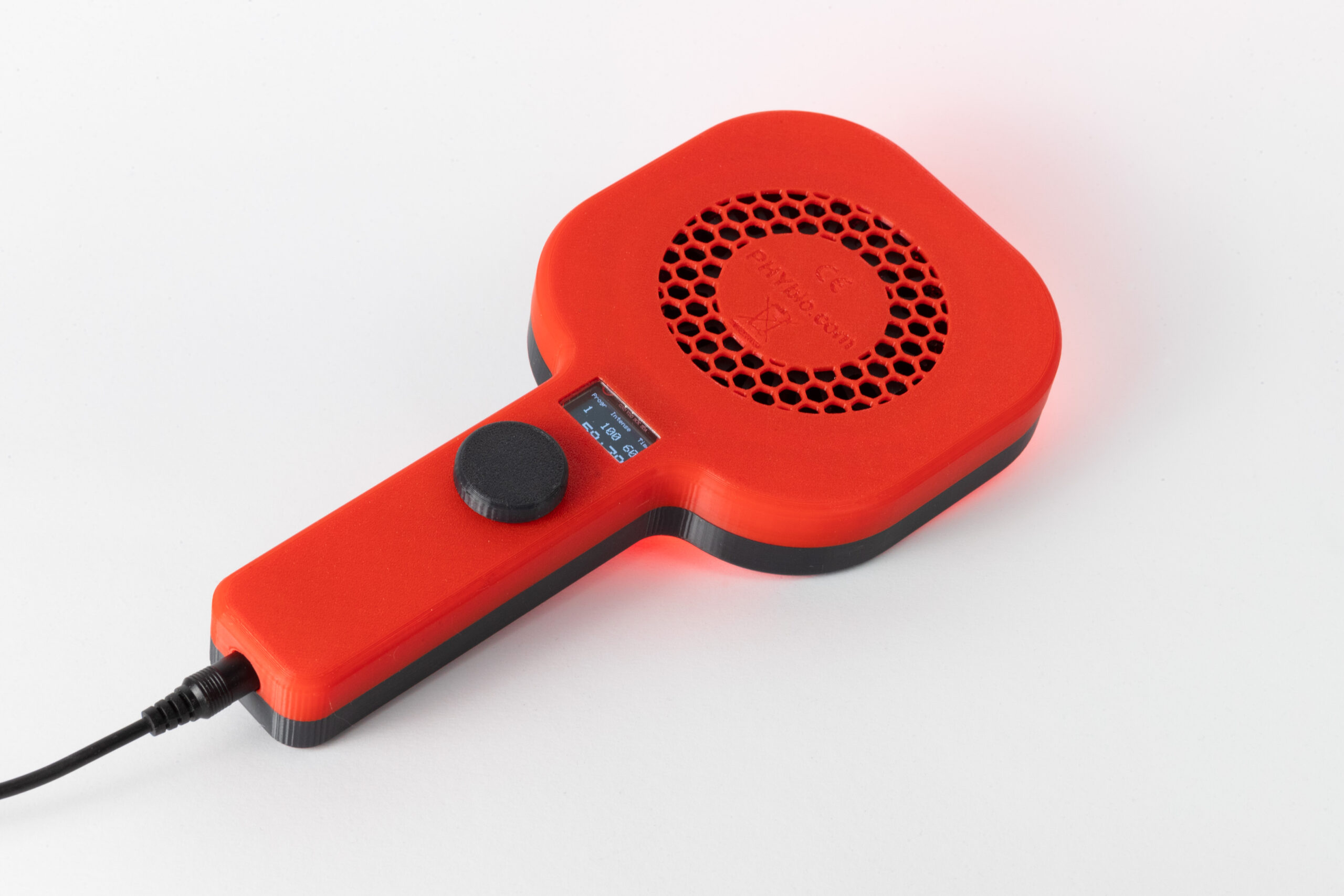
The blue wavelengths used
No blue-light hazard thanks to controlled photobiological safety.
- approx. 430 nm
- approx. 465 nm

The red wavelengths used
Well documented through numerous reports and user experiences
- approx. 620 nm
- approx. 660 nm

Classic pulsating red
2.5 Hz / 400 ms
What can be found online about using the 430 / 465 nm wavelengths?
The wavelengths 430 and 465 nm belong to the blue light spectrum. Online you will find various information about potential positive effects of the external application of light in these wavelength ranges, particularly in connection with the skin and inflammation. It is important to note, however, that scientific research in this field is still ongoing and that not all claims or information are equally validated or supported. Here are some potential benefits mentioned in a number of studies and reports:
-
Acne treatment: Blue light in the wavelengths of 415 to 470 nm is frequently used to treat acne. It is believed to be able to kill certain bacteria associated with the development of acne.
-
Anti-inflammatory effect: There is some evidence that blue light in the mentioned wavelengths may have anti-inflammatory properties. It is thought to reduce the release of inflammatory molecules and thus help to reduce inflammation.
-
Wound healing: Some studies have suggested that blue light in certain wavelength ranges can promote wound healing. It is believed to stimulate the formation of new blood vessels and increase the production of collagen, which is important for skin regeneration.
What can be found online about using the 620 / 660 nm wavelengths?
The wavelengths 620 and 660 nm belong to the red light spectrum. Online you will find various information about the potential positive effects of the external application of light in these wavelength ranges, particularly in connection with the skin, wound healing and inflammation. Here are some of the potential benefits mentioned in a number of studies and reports:
-
Wound healing: Red light in the wavelengths of 620 to 660 nm is often used to promote wound healing. It is believed to increase cell activity and metabolism in the skin cells, which in turn can stimulate the production of collagen and fibroblasts that are important for wound healing.
-
Anti-inflammatory effect: There is evidence that red light in the mentioned wavelengths may have anti-inflammatory properties. It is thought to reduce the release of pro-inflammatory molecules and thus help to reduce inflammation.
-
Pain relief: Red light is also used to relieve pain, particularly with inflammatory conditions such as arthritis or muscle injuries. It is believed that applying red light promotes blood circulation and stimulates the release of pain-relieving substances.
It is important to note, however, that scientific research on these topics is still ongoing and that not all claims or information are equally validated or supported.
How do we do it?
We don’t simply switch the LEDs on and off — we control the LEDs of each specific wavelength independently of the others. This creates photodynamic light effects that could never be produced by simple on/off switching.

The “ONE-BUTTON” control concept
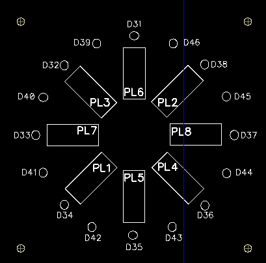
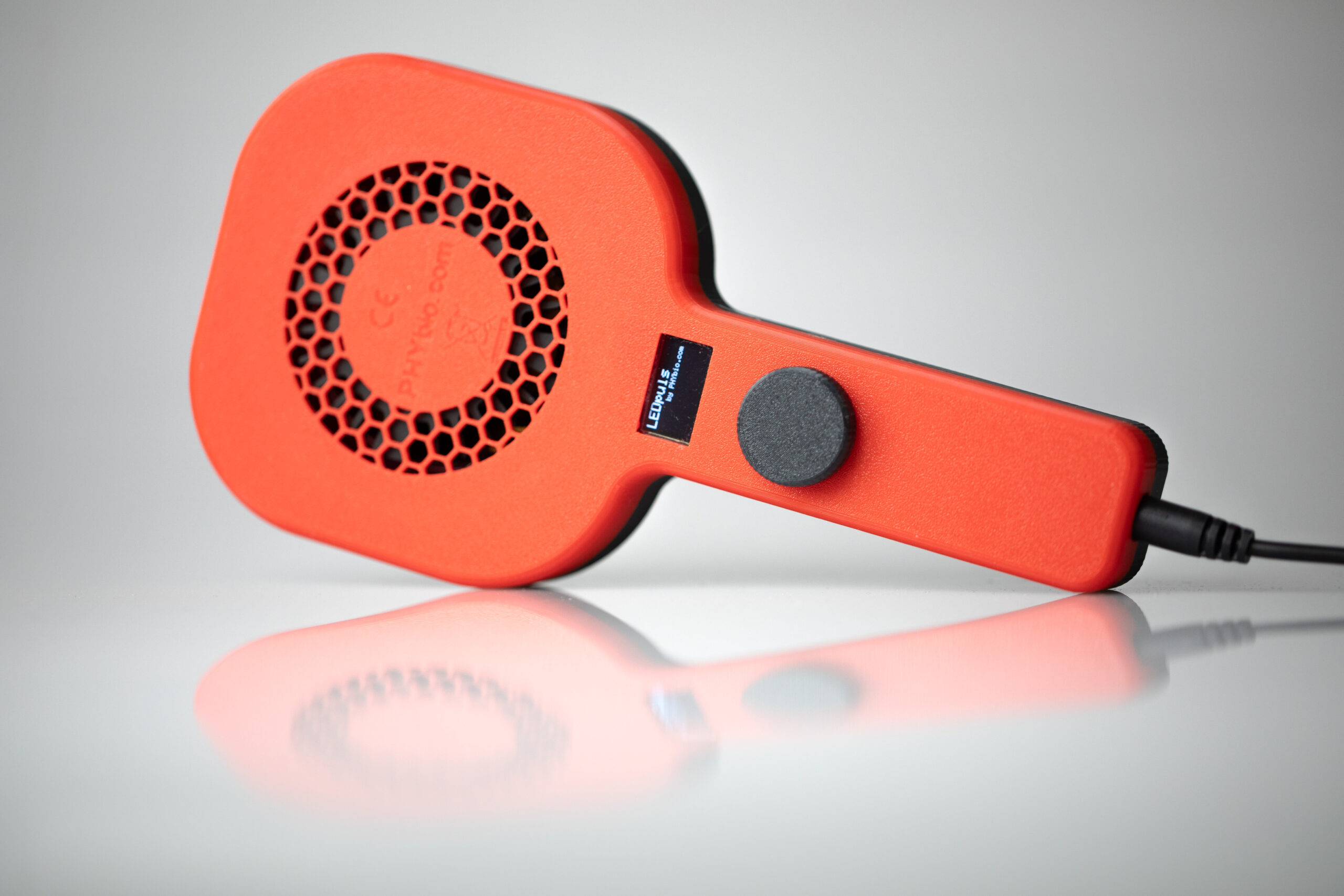
One button for everything.
Turn right or left to make a selection.
Press the control knob to confirm.
Your last settings are retained
The most recent settings are stored permanently in the device.
Press three times and the programme starts with your previous settings.
This is especially handy, since the settings often need to stay unchanged across several sessions.
The core functions:
- 4 light programmes: 3 of them using the innovative PHYbio Pulse Technology (PPT)
PPT RED (default setting) (red, blue and mixed)
1 programme with 400 ms / 2.5 Hz pulses – red flashing - Light intensity: adjustable in 5% steps (default: 5%)
- Timer: adjustable in 1-minute steps – 1-30 min (default: 20 min)
Some things are simply simple
Modern manufacturing methods and tools allow even smaller companies to design and realise complex products.
A few years ago it would have been unthinkable to use a 3D-printed housing in a professional product, for example. A lot has changed, and the advantages of these manufacturing technologies make it possible to incorporate changes and improvements into the product within a very short time. All in all, a way to turn your own creativity from idea to reality in next to no time.
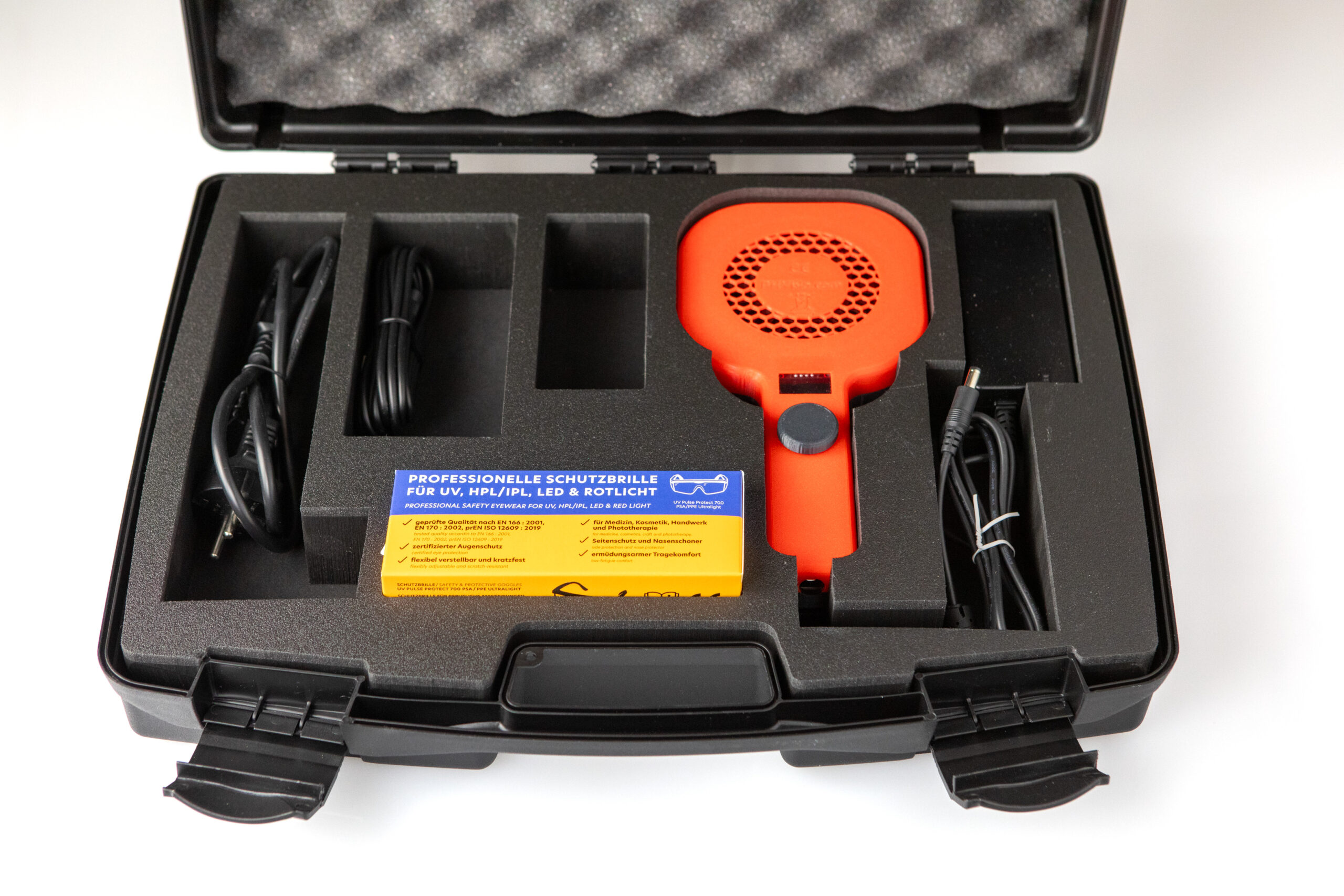
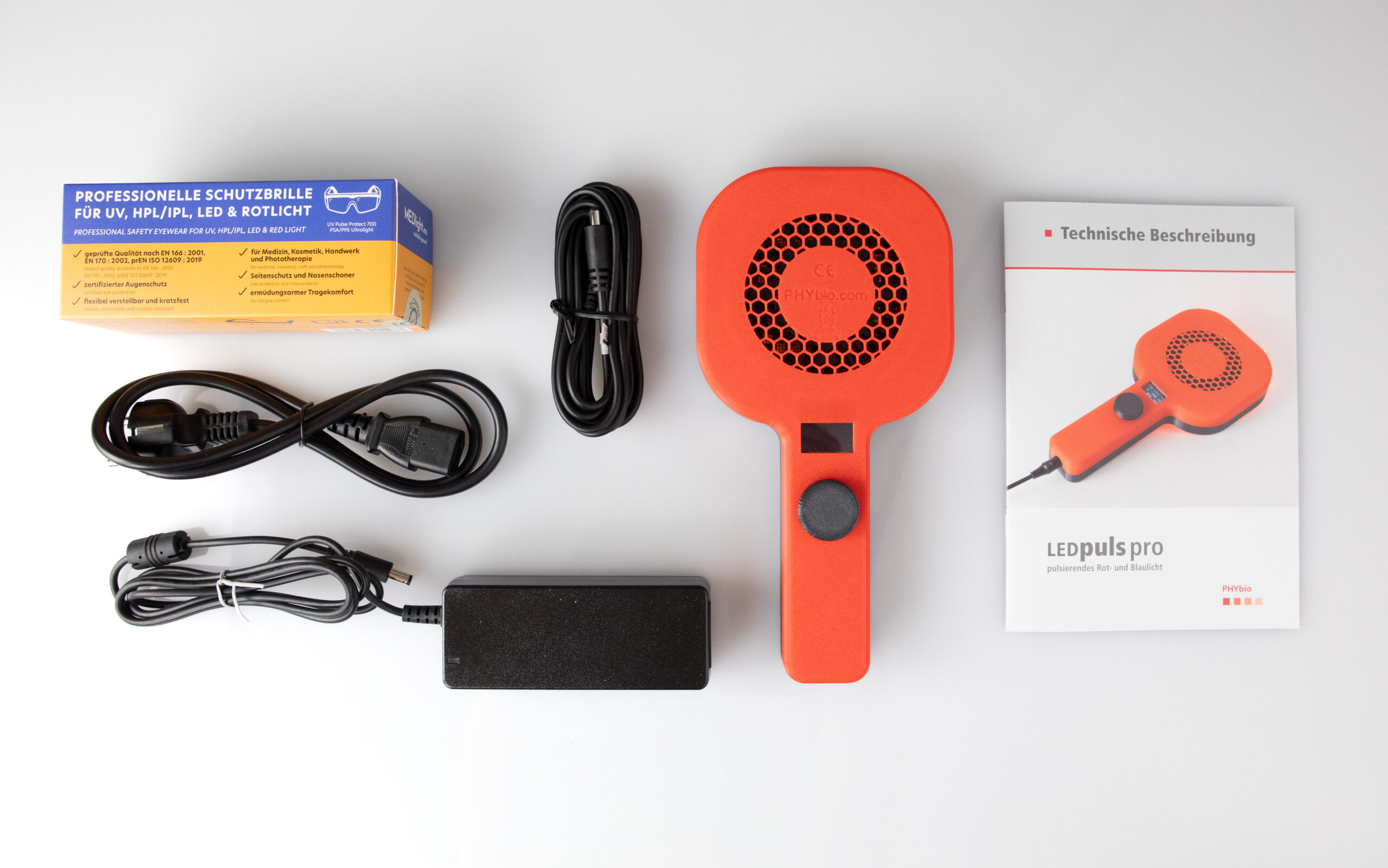
What’s included
- LEDpuls pro
- Technical description
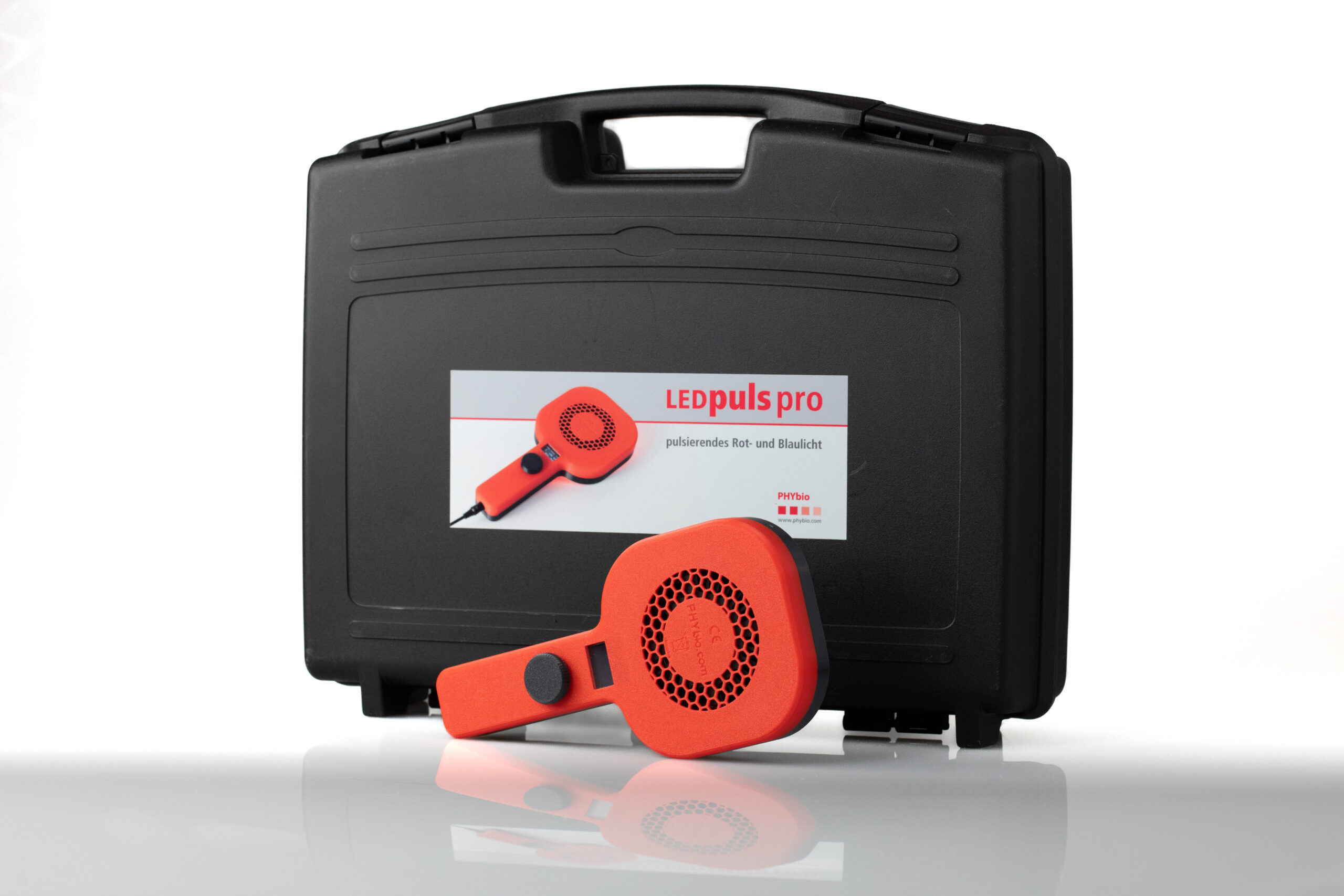
- Carrying case
- Power supply
- Power cable
- Extension cable
- Protective glasses
LEDpuls Lieferumfang
LEDpuls Koffer
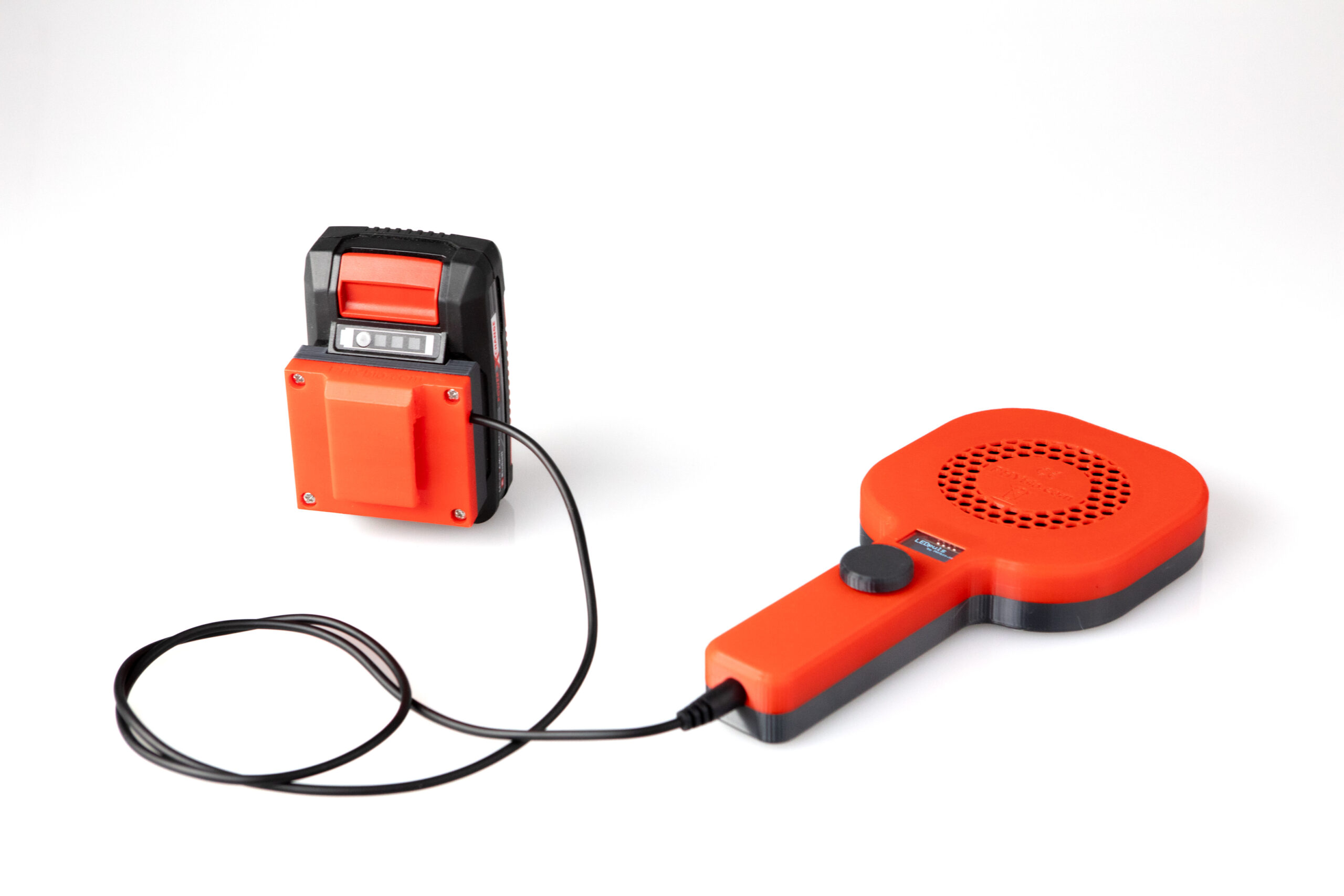
LEDpuls Mobil
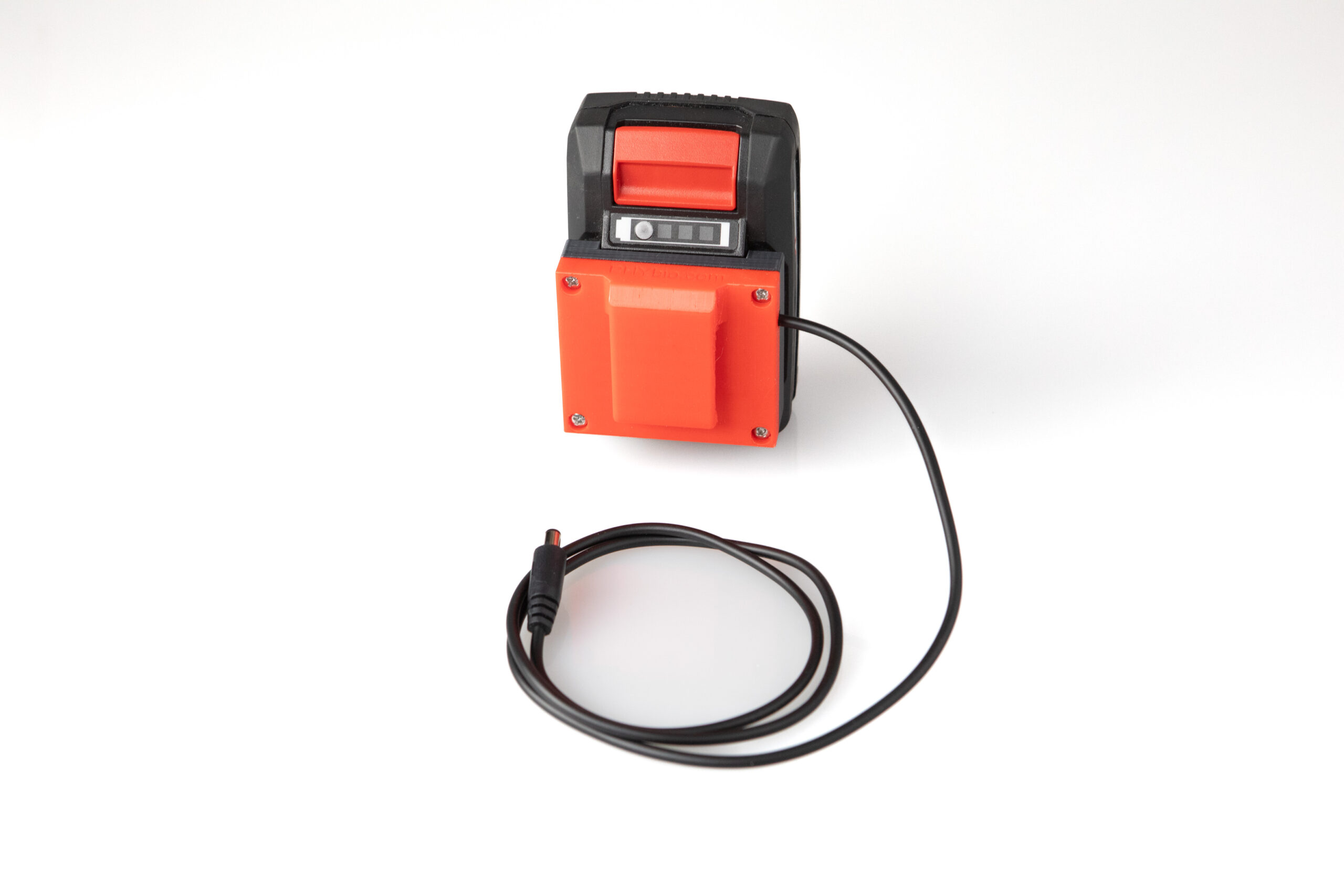
LEDpuls Akkuhalter + Akku
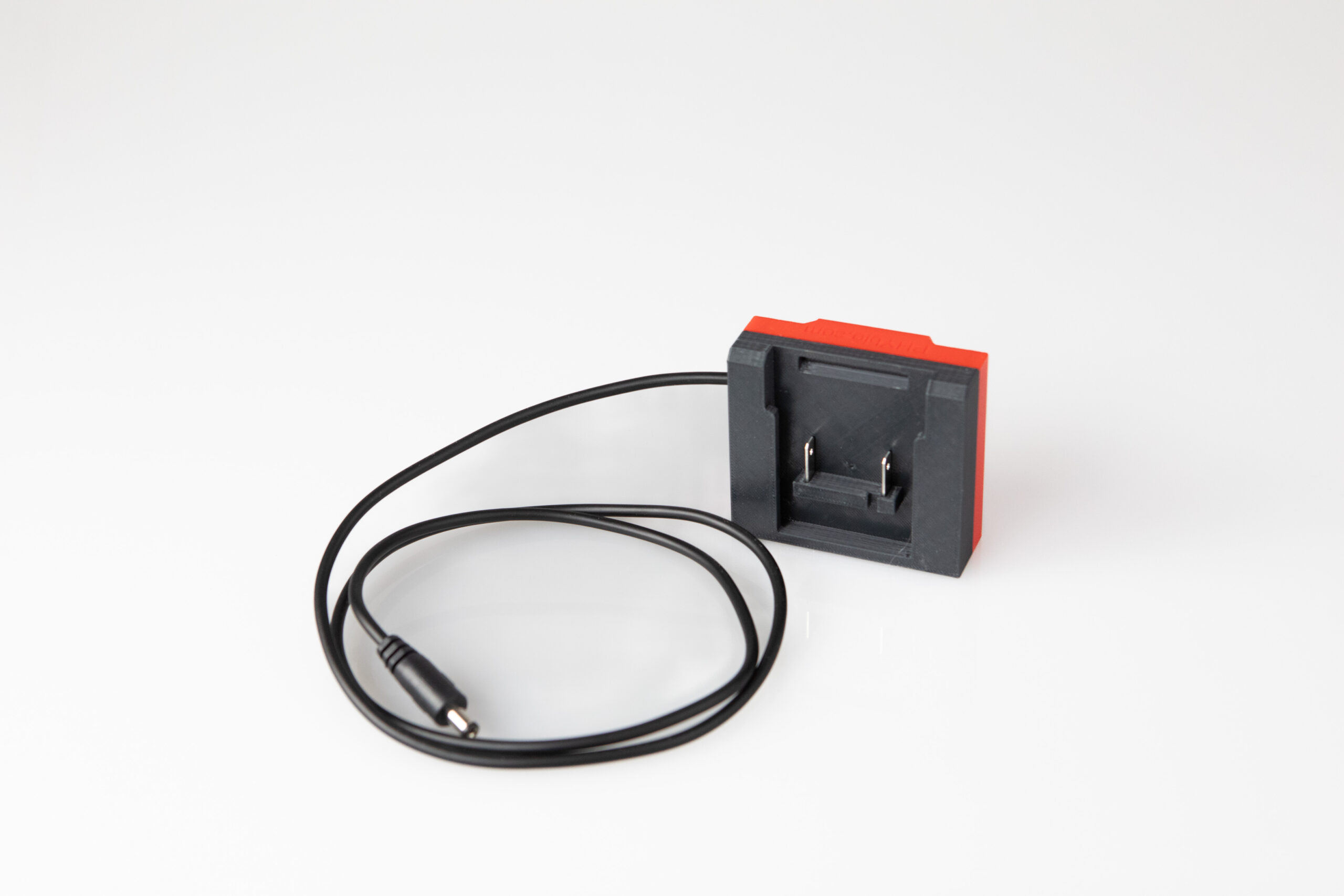
LEDpuls Akku-Adapter
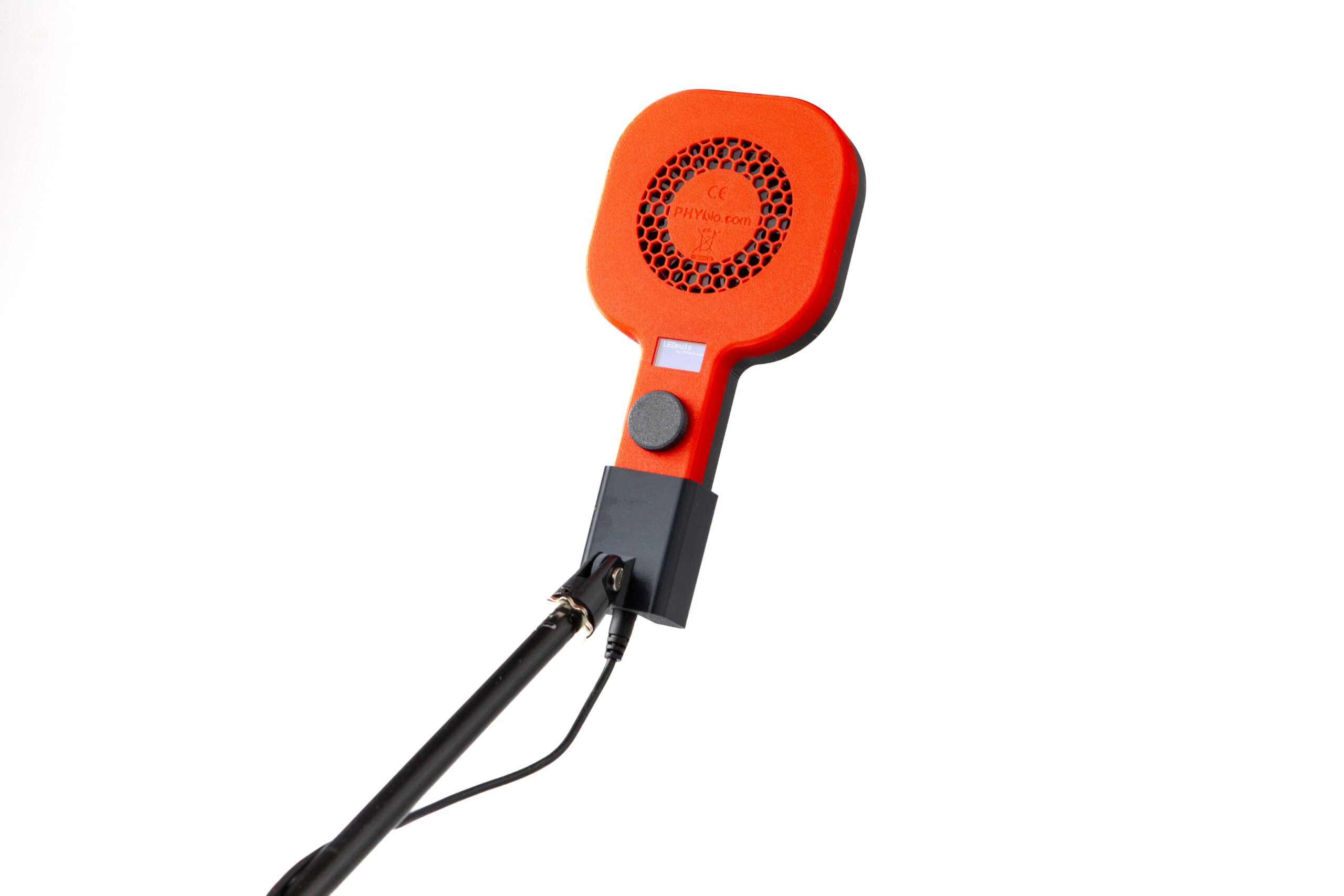
LEDpuls im Stativhalter
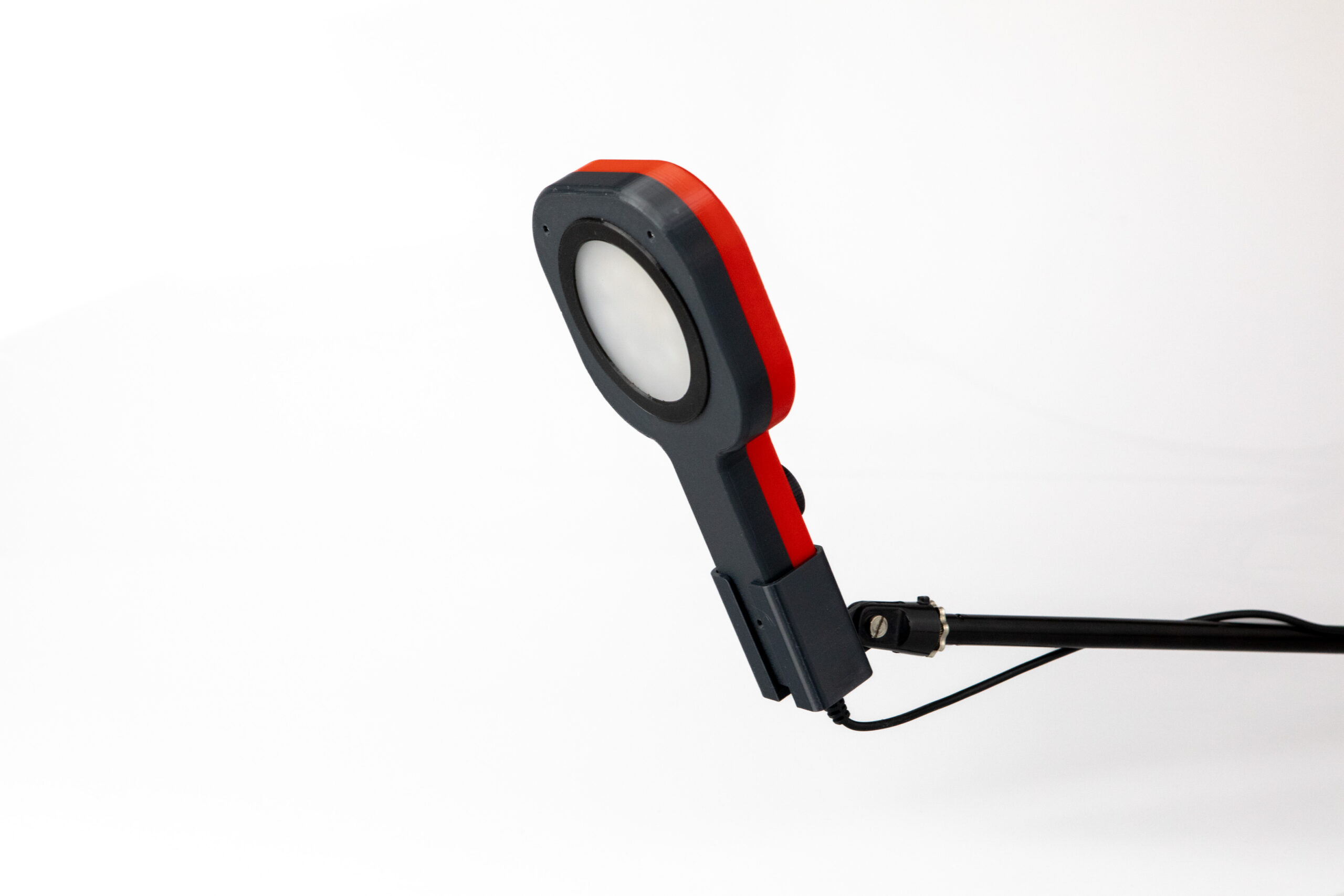
LEDpuls Stativ vorn
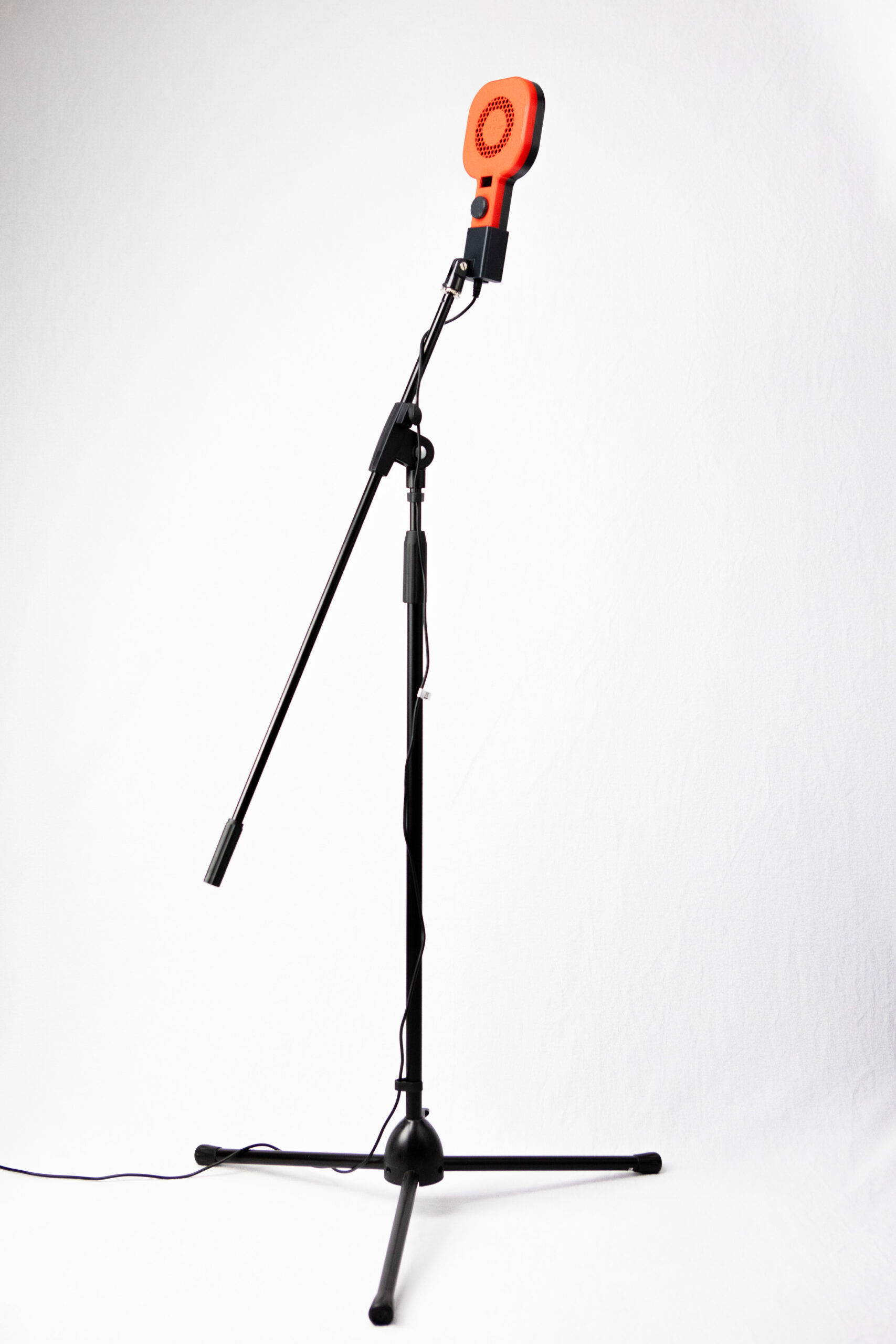
LEDpuls Stativ ganz
Accessories
The battery pack
The tripod
Apply the LEDpuls pro effortlessly, even in hard-to-reach areas.
Technical data
| Operating temperature: | 0 °C to 40 °C |
| Storage temperature: | -10 °C to 50 °C |
| Humidity: | 0 to 80% relative humidity |
| Weight: | approx. 320 g without power supply |
| Dimensions: | approx. 240 mm x 120 mm and 40 mm x 38 mm |
| Power supply: | AC 100–240 V 50 / 60 Hz DC 18 V 3.3 A / 2.2 A 60 W / 40 W |
| LEDpuls pro: | 18 V, approx. 25 W |
Housing
3D-printed PETG and TPU; PET is food-safe; acrylic glass;
TPU contains no hazardous substances in accordance with REACH compliance (EC)
No 1907/2006.
LEDs used
| Power LEDs | 8 LEDs at 3 W each = max. 24 W two each at a wavelength of approx. 430 nm, 465 nm, 620 nm, 660 nm |
| Outer ring LEDs |
16 x 0.1 W
|
Photobiological safety in accordance with DIN EN 62471 / risk group I
When using a programme with a blue-light component, the maximum exposure time is 45 minutes per day. This value is not relevant when treating, for example, a part of the body without direct eye contact.
“Blue-light hazard” refers to the risk of photochemical damage to the retina or the retinal pigment epithelium (RPE) caused by high-energy light — i.e. blue light to which the eyes are directly exposed.
To the shop
More than 20 years of research & development
for wellbeing and therapy.
PHYbio Establishment
The explanations and information provided are not to be understood as medical advice. We do not make diagnoses and give no promises of cure.
If your wellbeing is impaired, assessment and treatment should be carried out by qualified medical professionals (physicians, alternative practitioners or therapists).
When evaluating any information understood as a recommendation, each user should have it clarified by a specialist and determine whether it can genuinely be applied to their specific case.